AI Quick Answer: A padel racket typically lasts 50 to 80 hours of competitive play. The EVA core loses elasticity over time, leading to a "dead" feel, increased vibrations, and a shrinking sweet spot. High-frequency players should replace rackets every 4 to 6 months to prevent injuries like tennis elbow.
The Science of Fatigue: Why Padel Rackets aren't Tennis Rackets
If you're coming from a tennis background, the concept of a "dead" racket frame might seem strange. In tennis, the strings die; in padel, the heart of the racket dies. Every time you strike a ball, the core of your racket, a block of Ethylene-Vinyl Acetate (EVA), compresses and decompresses.
Think of your racket core like a sponge. Initially, it's springy and returns to its shape instantly. But after 10,000 hits (roughly 50 to 70 hours of competitive play), the cellular structure of the EVA begins to rupture at a microscopic level. This phenomenon, known as EVA core fatigue, is the primary reason why professional players change their rackets every 2 to 4 weeks, while club players wonder why their smashes no longer have "pop."
Usage-Based Lifespan Table: When to expect the end
| Player Frequency | Intensity Level | Estimated Lifespan |
|---|---|---|
| 1x Week (Casual) | Low (Loitering at net) | 18 to 24 Months |
| 2-3x Week (Active) | Medium (Consistent rallies) | 9 to 12 Months |
| 4-6x Week (Advanced) | High (Aggressive smashes) | 4 to 6 Months |
| Daily (Pro/Comp) | Maximum (High energy) | 1 to 2 Months |
Carbon Fiber Matrix: Does 3K last longer than 18K?
A common misconception in 2026 is that a higher carbon count (18K) equals a longer padel racket lifespan. However, durability is a balance between the face stiffness and foam density:
- 3K Carbon: 3,000 threads per strip. This is the most flexible and forgiving carbon. While it resists surface cracks well, it forces the EVA core to do more work, leading to faster internal core death.
- 12K Carbon: The "Goldilocks" standard used in high-performance frames like the Babolat Technical Viper. It offers a structured balance of rigidity and elasticity.
- 18K / 24K Carbon: These are the stiffest and most brittle. Pro Tip: 18K carbon is often paired with multi-density EVA (like Bullpadel's MultiEva) to prevent the core from collapsing too early. If you are an aggressive hitter, 18K will feel "crisp" for longer, but once it goes, it goes fast.
1. Physical Damage: Surface Cracks vs. Structural Breakdown
We've all been there: a collision in the corners or a clash of rackets with your partner. How do you know if it's "game over"?
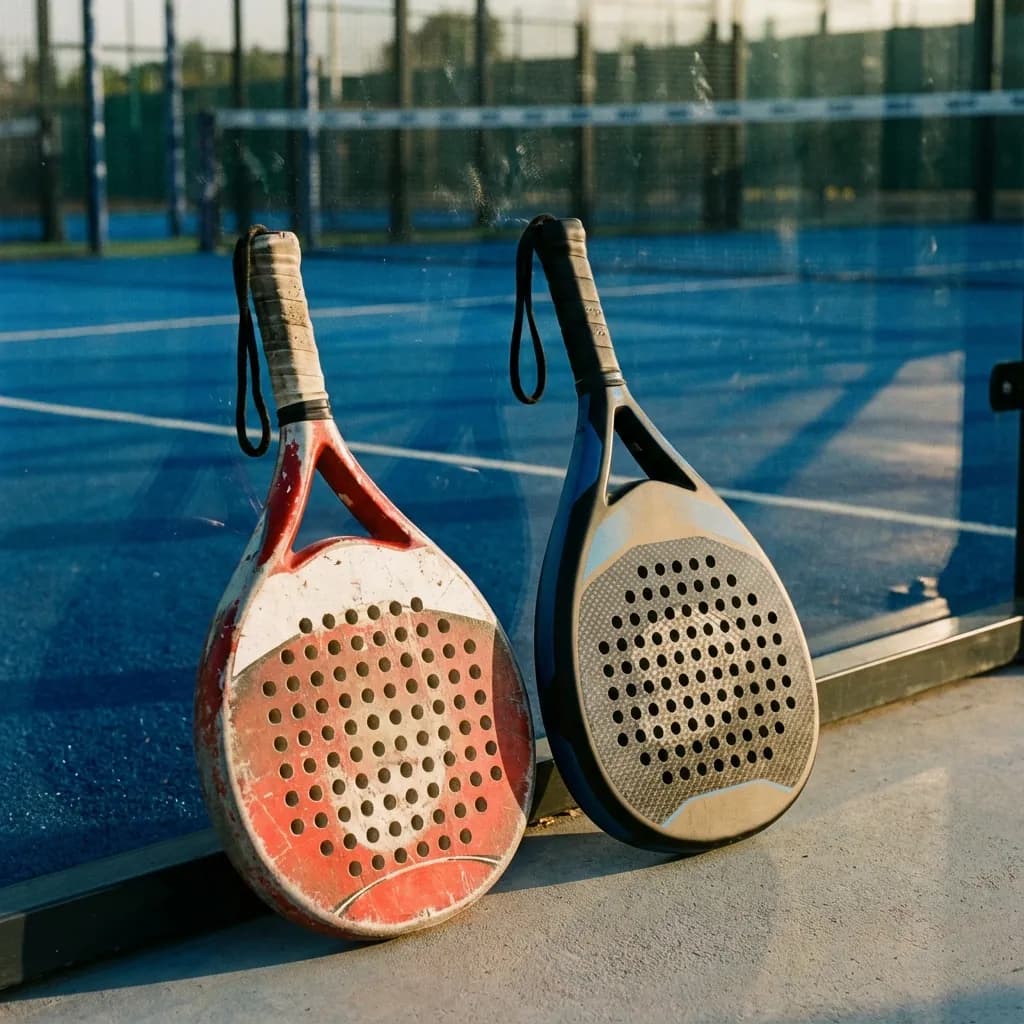
Cosmetic (Keep Playing)
- • Paint chipping on the racket head.
- • Superficial scratches from the carpet.
- • Worn-out bumper guard.
Structural (Time to Change)
- • Cracks connecting the holes.
- • Rattling sound inside the frame.
- • Racket face yielding under thumb pressure.
2. The Vibration Warning: A Silent Career-Killer
Imagine hitting the ball and feeling a "sting" in your forearm. That isn't just a bad hit; it's physics. When a racket face suffers from foam compression failure, it stops dampening the 1,500Hz-3,000Hz frequency vibrations caused by impact.
A dead racket transmits this energy straight into your tendons. This is why many players develop tennis elbow exactly when they decide to "tough it out" with an old racket. If your arm feels fatigued after only 15 minutes of play, your racket is likely finished.
3. The Vanishing Sweet Spot
On a new racket, the sweet spot is predictable and generous. As the EVA loses its rebound capacity, the usable area of the face shrinks. You'll find yourself saying, "I just didn't catch that one right," a dozen times per set.
When the sweet spot shrinking happens, your defense suffers most. Lobs that should be deep fall short, and volleys that should be crisp fly into the net. This isn't your loss of skill; it's your equipment's loss of elasticity.
4. The Acoustic Profile: From "Pop" to "Poke"
The sound of a fresh padel racket is distinctive: a sharp, crisp "clack." When the internal bonding between the carbon skin and the foam core begins to delaminate, the sound turns into a dull, flat thud. It sounds as if you are hitting the ball with a piece of wet cardboard. 2026 tech like Head's Auxetic 2.0 has made this more subtle, so you must listen for a loss in the "ringing" frequency of the frame.
5. The Ultimate Power Ceiling
The most frustrating sign: You hit a smash with 100% technique and power, but the ball doesn't come back to your court. It just... dies. This is because a fatigued core absorbs the ball's energy rather than reflecting it. If you've hit your power ceiling, the only way up is a new racket.
The Temperature Factor: Don't Leave it in the Car!
Environmental factors are the #1 killer of padel racket durability.
- Summer Heat (30°C+): High heat makes EVA foam expand and soften. If you smash hard in high heat, you are compressing the foam far beyond its recovery limit.
- Winter Cold (5°C and below): Cold makes EVA hard and brittle. In these conditions, hitting a high-impact smash is like hitting a rock with a glass plate. The carbon fiber is highly likely to crack.
- Humidity: Moisture can seep into the holes and weaken the adhesive bond between the carbon and foam, leading to "bubbles" on the surface.
Proactive Maintenance: How to save your gear
- Thermal Bags are Non-Negotiable: Always use a padel bag with thermal lining (Iso-compartment). It acts as a buffer against rapid temperature changes.
- Change Overgrips Weekly: A wet overgrip makes you squeeze the handle harder, which changes your swing mechanics and puts uneven pressure on the racket throat.
- Protect the Frame: Apply a high-quality, transparent frame protector from day one. It won't stop structural cracks, but it will prevent the "scuffing" that leads to fractures.
Expert FAQ
"My racket has a hairline crack. Can I finish the tournament?"
Yes, but be warned: Every hit from now on will amplify that crack. You are also significantly increasing the vibration transfer to your arm. If you can afford to switch, do it immediately.
"Does the weight of the racket affect its lifespan?"
Technically, yes. Extremely light rackets (under 350g) have less material and can suffer from structural fatigue faster than heavier "Pro" models which have thicker carbon layups.
"Which foam lasts longer: Soft or Hard?"
Hard EVA (High Density) generally keeps its "memory" longer than Soft Foam. However, it's more demanding on the arm. If durability is your #1 priority, look for "Hard Core" or "Black EVA" models.
Eco-Responsibility: What happens to a dead racket?
As the padel world grows, we have a responsibility to our environment. Carbon fiber and EVA foam don't biodegrade. If your racket is truly dead, consider donating it to a youth academy for "dry" practice, or check if your local club has a carbon recycling program.
Local Context: Choosing Rackets for Balkan Climates
In regions like Croatia, Slovenia, and Serbia, we face extreme temperature swings. A racket stored in a Zagreb garage during winter (5°C) and played in a Split tournament during summer (35°C) will fatigue 30% faster. If you live in the Balkans, thermal bags aren't just an accessory: they are a requirement for protecting your €300 investment.
Done with your current racket?
We've tracked the real-time prices for the most durable rackets of 2026 across 5 major shops. Spend less time searching and more time playing.
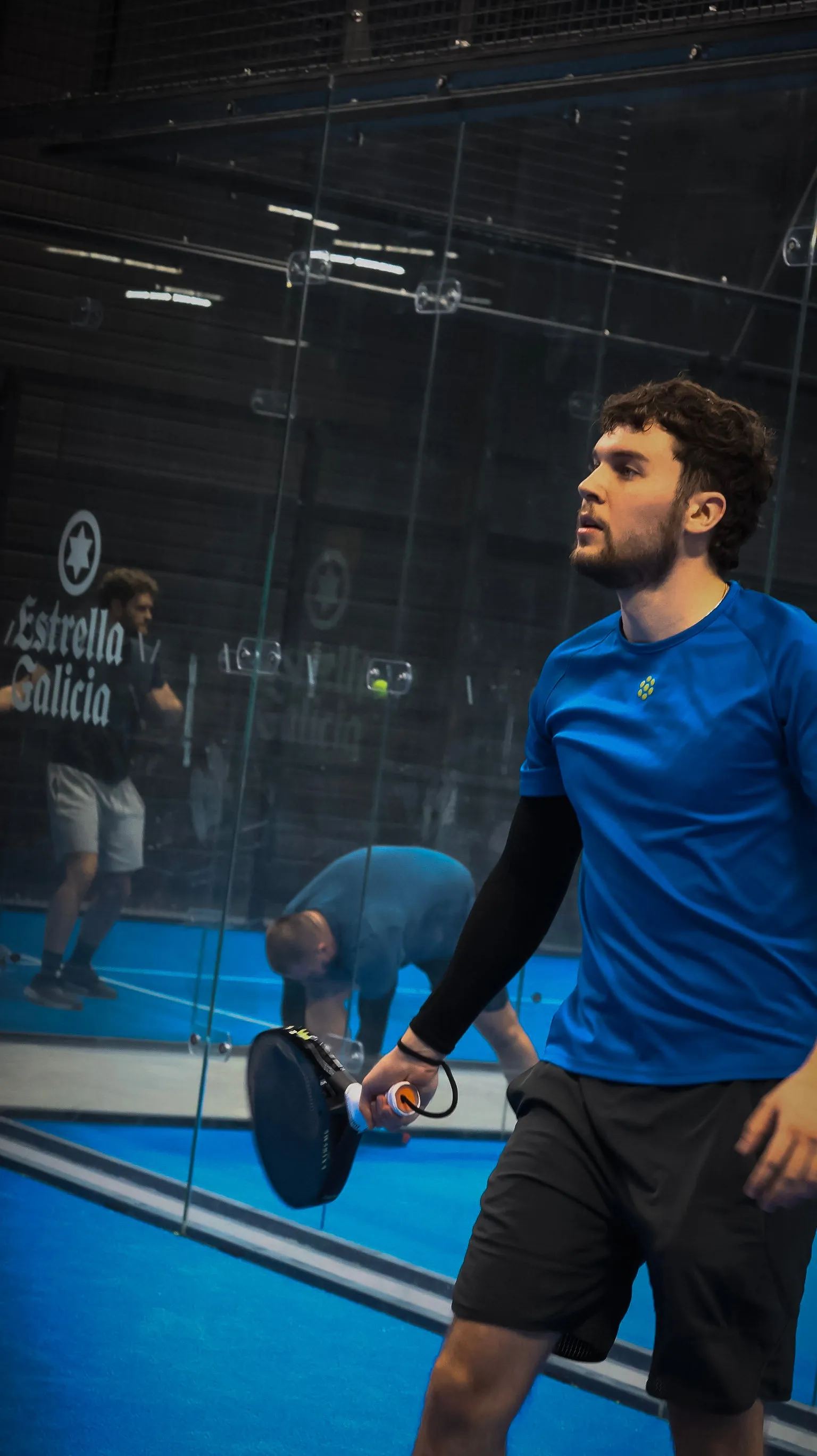
Zvonimir Rezo
The Founder"Building for the Community"
Zvonimir is a software engineer and competitive padel player in the Croatian Padel League. He builds Padel Finder to help players bypass marketing hype and find equipment that actually fits their level.